

Sci. Pharm. 2024, 92(2), 24; https://doi.org/10.3390/scipharm92020024 - 04 May 2024
Abstract
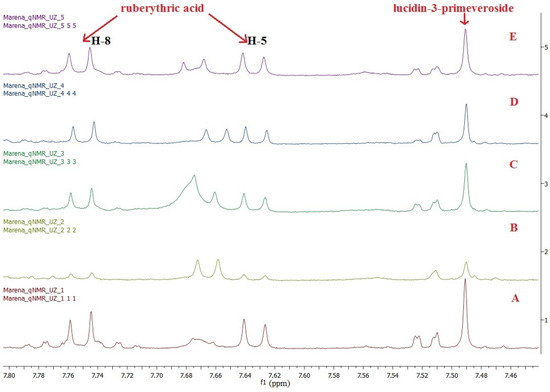
The roots and rhizomes of Rubia tinctorum L. have been widely used both for industrial and medicinal purposes for centuries. The primary biologically active substances from Rubia tinctorum L. roots and rhizomes are anthraquinone derivatives such as ruberythric acid and lucidin-3-primeveroside. Their identification
[...] Read more.
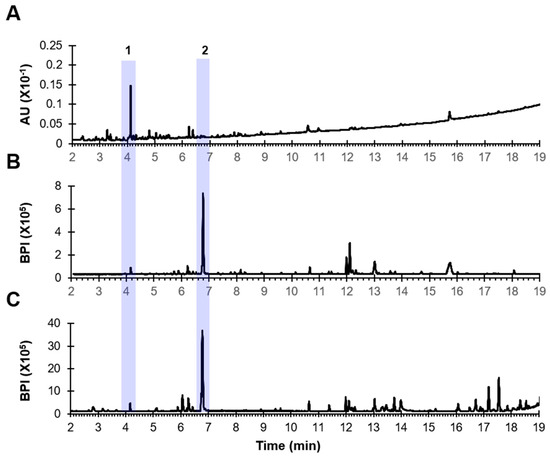
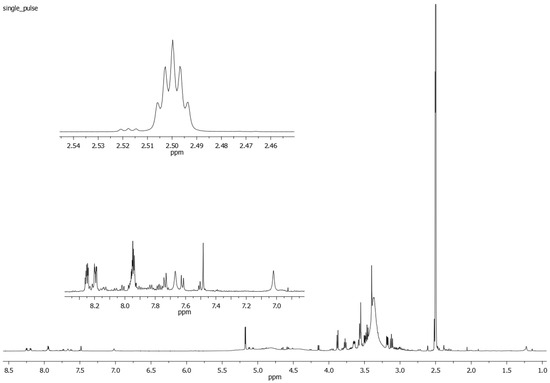
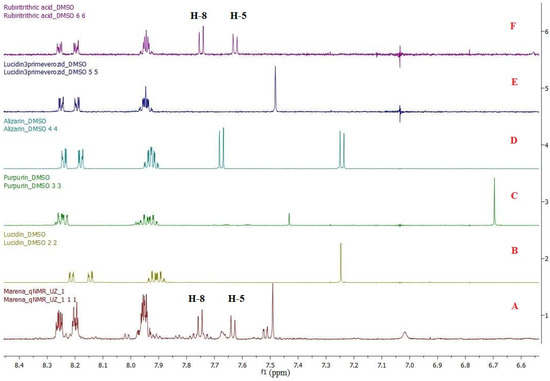
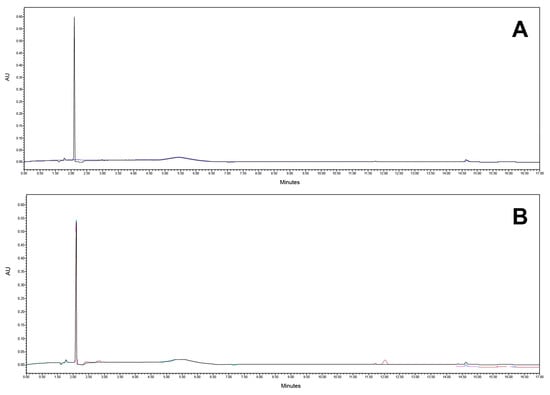
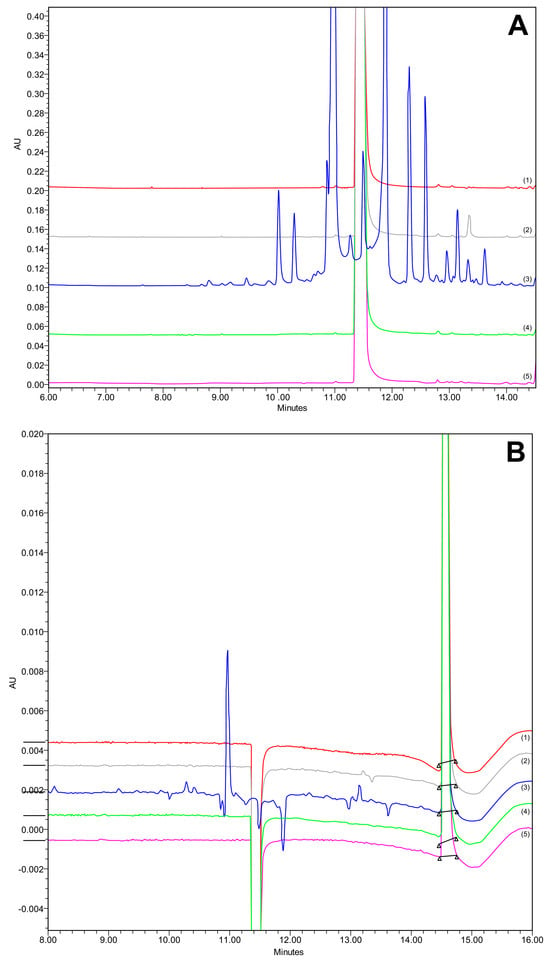
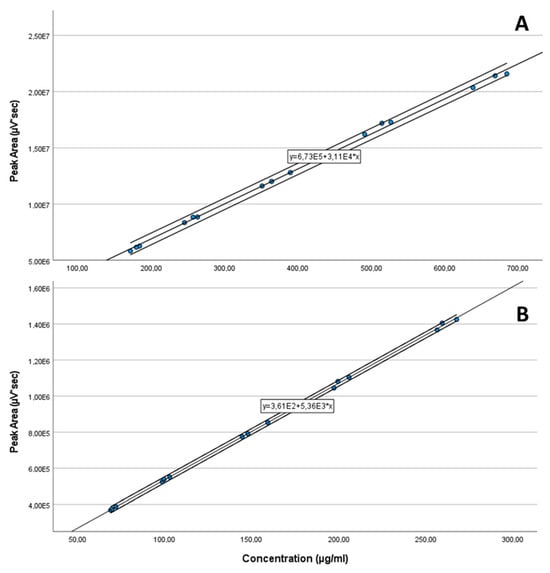
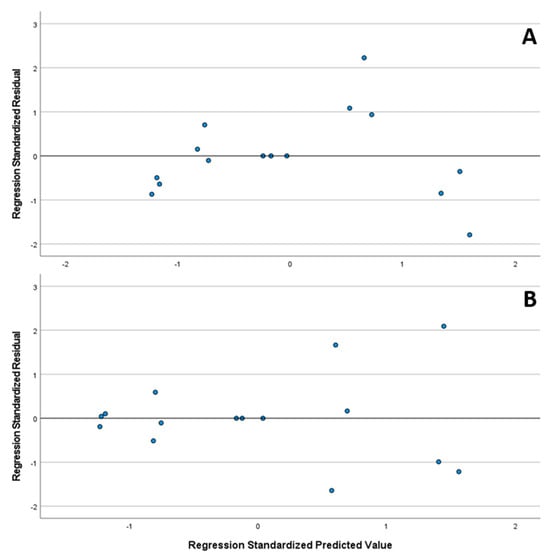
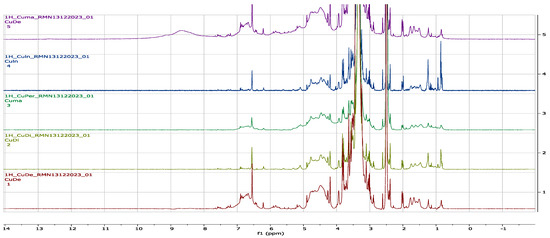
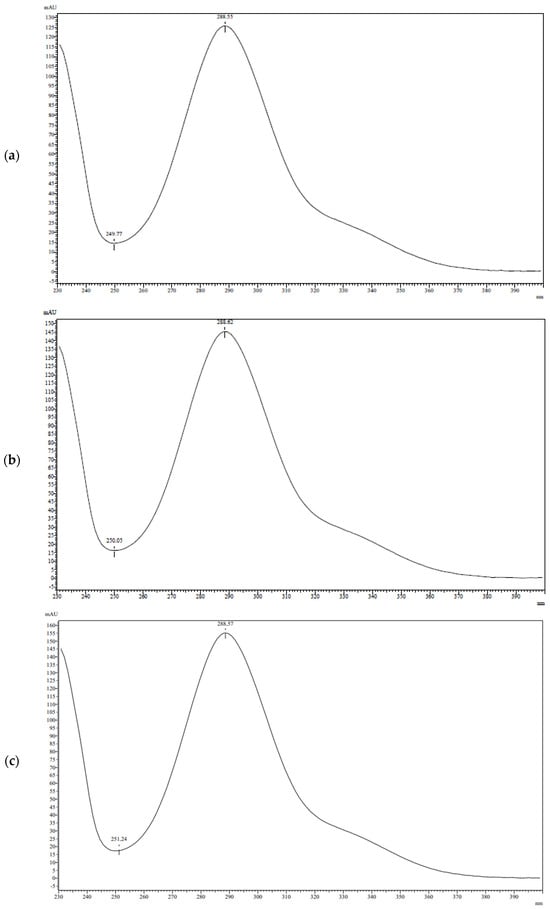
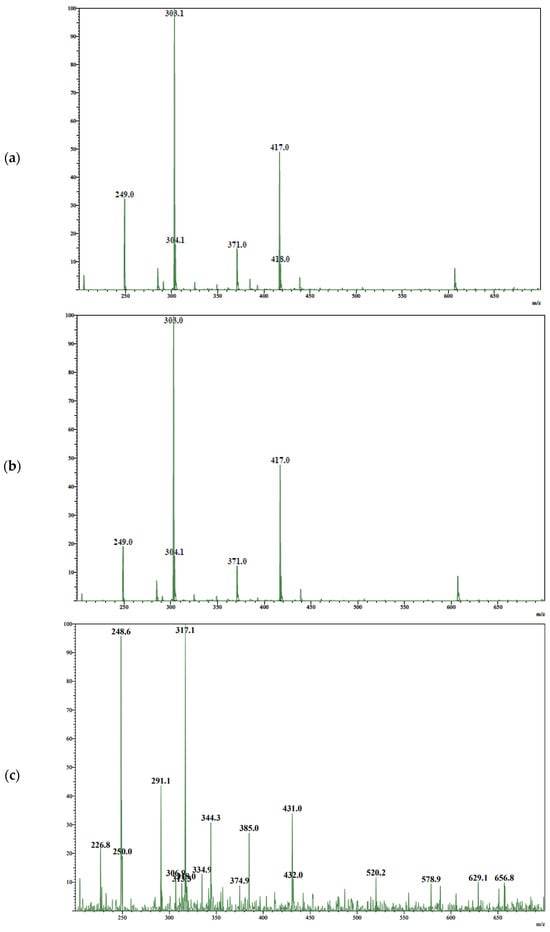
The roots and rhizomes of Rubia tinctorum L. have been widely used both for industrial and medicinal purposes for centuries. The primary biologically active substances from Rubia tinctorum L. roots and rhizomes are anthraquinone derivatives such as ruberythric acid and lucidin-3-primeveroside. Their identification and quantification are carried out by various analytical methods, requiring a complicated sample preparation as well as special reagents and reference samples. However, NMR spectroscopy has no limitations of this kind. In this work, we have developed and validated a new express and standard-free method for the qualitative and quantitative analysis of ruberythric acid and lucidin-3-primeveroside by 1H NMR spectroscopy in the extracts from the roots and rhizomes of Rubia tinctorum L. In this work, we have optimized the conditions of the sample preparation and registration of 1H NMR spectra, determined the optimal solvent and reference compound and confirmed the obtained results by HPLC-UV-MS.
Full article
(This article belongs to the Topic Natural Products and Drug Discovery)
►
Show Figures
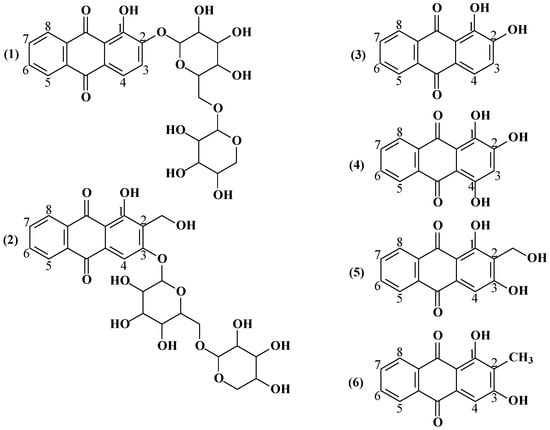
Figure 1