

Sci. Pharm. 2024, 92(2), 20; https://doi.org/10.3390/scipharm92020020 - 11 Apr 2024
Abstract
►
Show Figures
Synthetically produced silicon dioxide used as a food additive exhibits nanoparticle size and shape during the early stages of manufacturing. Even when processed into food products, these nanoparticles are detected. Although processing food ingredients into nanoparticles can improve absorption rates or enhance texture,
[...] Read more.
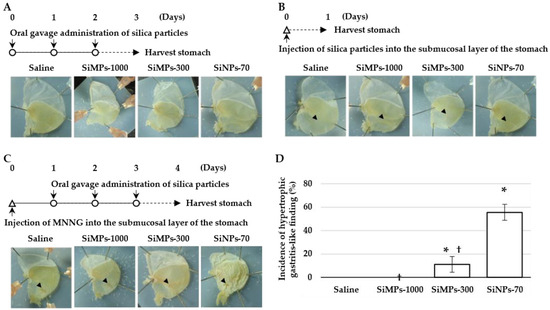
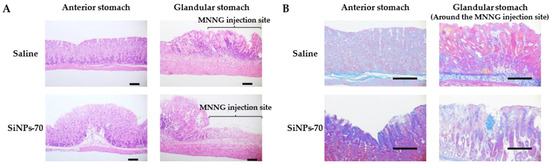
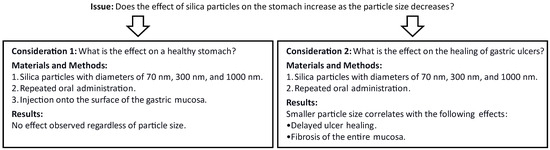
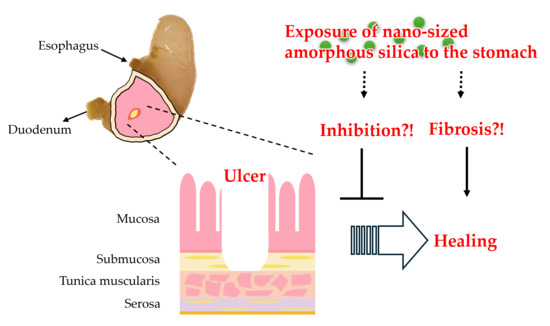
Synthetically produced silicon dioxide used as a food additive exhibits nanoparticle size and shape during the early stages of manufacturing. Even when processed into food products, these nanoparticles are detected. Although processing food ingredients into nanoparticles can improve absorption rates or enhance texture, there are concerns about the specific biological effects of nanoparticles. In this study, three types of silica particles, including nanosized particles, were repetitively administered to the stomach using a gastric tube or exposed to a single injection into the submucosal layer of the stomach. Macroscopic and microscopic examinations did not reveal acute toxicity. However, when silica particles were administered to the stomach during the healing and regeneration process of gastric ulcers (induced by injecting the alkylating agent of N-Methyl-N′-Nitro-N-Nitrosoguanidine into the submucosal layer), silica particles with a diameter of 70 nm (SiNPs-70) delayed regeneration more strongly than microsized silica particles with diameters of 300 nm or 1000 nm (SiMPs-300, -1000). Furthermore, fibrosis for tissue regeneration spread throughout the entire mucosa of the stomach, resulting in hypertrophic gastritis-like symptoms. The frequency of this symptom was over 50% with SiNPs-70, 20% with SiMPs-300, and 0% with SiMPs-1000. Although the silica particles used in this study differ from actual samples found in food, the impact of particle size, particularly the effects unique to nanosize, was identified as toxicity in the stomach healing process.
Full article
Graphical abstract